
Before You Buy Record Players: A 9-Point Checklist
Choosing among record players is easier when you separate the features that affect everyday listening from the extras that mainly change appearance or convenience. A compact all-in-one unit may suit casual listening, while a component turntable can offer more upgrade potential and better control over sound. Before comparing prices, check these nine points: record speeds, record sizes, cartridge and stylus quality, tonearm design, built-in preamp, connectivity, speaker compatibility, physical setup requirements, and long-term support.
Confirm the Speeds and Record Sizes You Need
Start by identifying the records you actually plan to play. Most modern vinyl collections use 33 1/3 RPM LPs, while 45 RPM singles and some 78 RPM records require different settings. Not every turntable supports all three speeds, and a model that handles 78s may need a dedicated stylus rather than the stylus supplied for LPs and singles. If you inherit older records, check their labels and condition before assuming one cartridge can safely play everything.
Record size matters as well. A standard 12-inch LP and a 7-inch single do not always use the same cueing position, even when the player supports both. Automatic models may select the correct size, whereas manual players require you to place the tonearm carefully. Look for clearly marked speed controls, stable switching, and a platter large enough to support your records without an awkward overhang.
Check Cartridge, Stylus, and Tonearm Quality
The cartridge converts the stylus’s movement into an electrical signal, so it has a direct effect on detail, tracking, and record wear. Entry-level record players commonly use a replaceable ceramic cartridge or a basic moving-magnet design. A moving-magnet cartridge generally gives you a clearer upgrade path because replacement styli are widely available and different cartridge options can be fitted as your system develops.
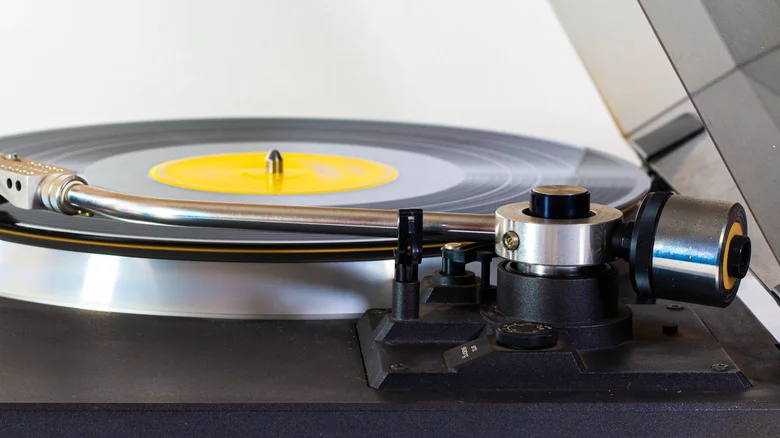
Inspect how the tonearm is balanced and lowered. A counterweight and adjustable tracking force provide more control than a very light, fixed arm, although a simple fixed design can still be suitable for occasional listening. Anti-skate adjustment is useful because it helps the stylus track the groove more evenly. Also confirm whether a replacement stylus is easy to buy; a low purchase price is less attractive if the correct replacement is obscure or costs nearly as much as a new player.
Decide Whether You Need a Built-In Preamp
A turntable produces a phono-level signal that is much quieter than the line-level signal expected by most powered speakers, receivers, and auxiliary inputs. A built-in phono preamp solves that mismatch by raising and equalizing the signal inside the player. It can make setup nearly plug-and-play, especially for a bedroom, office, or first vinyl system.
If you already own a stereo receiver or dedicated phono stage with a PHONO input, you may prefer a turntable without an internal preamp. Some models let you switch the preamp off, which gives you both options. Check the rear-panel labeling carefully: connecting a turntable with its preamp enabled to a receiver’s PHONO input can produce excessive volume and distortion. Conversely, connecting a turntable without a preamp to a standard AUX or LINE input will usually sound extremely quiet.
Review Connectivity and Speaker Compatibility
Beginner Turntable Guide: Avoid These Mistakes and Protect Your Records
Confirm how the player connects to the rest of your system before buying. RCA line outputs are the standard wired option, but cable length and grounding arrangements vary. Bluetooth transmission can be convenient for wireless speakers or headphones, though it introduces compression and may not suit listeners who want an entirely wired signal path. Bluetooth reception is a separate feature and is needed if you want to stream music from a phone through the turntable’s speakers.
Do not assume that a turntable includes speakers just because product photographs show a complete-looking setup. Some compact systems have built-in speakers, while others require powered speakers or a receiver. Passive speakers need an amplifier, and a small phono preamp alone will not drive them. When comparing Categories on a shopping page, distinguish all-in-one record players from standalone turntables so you compare like with like.
Measure the Setup Space and Included Accessories
Measure the shelf or cabinet, then leave room for the dust cover to open fully and for you to lift a record safely. A player that technically fits may still be difficult to use if the tonearm is close to a wall or the lid cannot stay open. Keep the turntable on a stable, level surface away from large speakers, radiators, and places where frequent vibration can cause feedback or skipping.
Check the box contents rather than relying on photographs. Useful inclusions can include a dust cover, 45 RPM adapter, RCA cable, grounding wire, counterweight, felt mat, remote control, and replacement stylus. A unit such as the model cr66 may appeal if its integrated format matches your space and listening habits, but verify its exact speed support, outputs, speaker arrangement, and included accessories before comparing it with a conventional component turntable.
Compare Drive Systems and Speed Stability
The drive system is another practical checkpoint. Belt-drive record players isolate the platter from some motor vibration and are common in home listening systems. Direct Drive designs connect the motor more directly to the platter, which can provide quick startup and consistent speed; they are often chosen for durability and DJ-style use. Neither label alone guarantees better sound, so also review platter weight, motor control, wow and flutter specifications, and whether the speed can be fine-tuned.
Speed stability matters because small variations can make sustained notes sound uneven or wavering. A heavy platter may help maintain momentum, but it also affects startup time and the motor’s workload. For most listeners, a reliable motor, level surface, correctly fitted belt where applicable, and accurate speed control matter more than a dramatic specification on a product page.
Recommended products
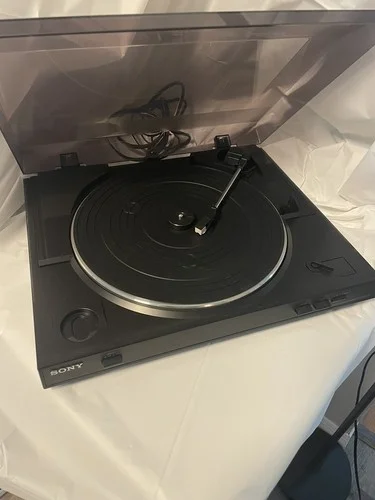
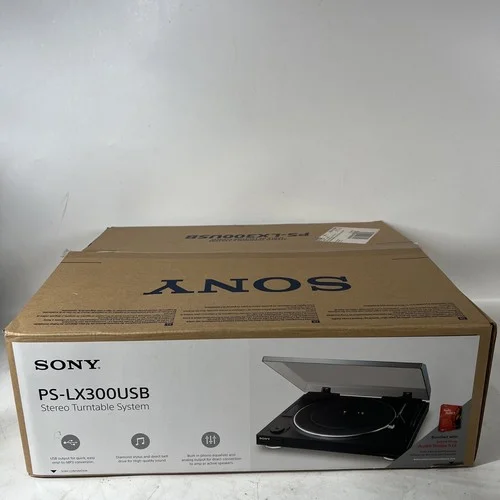
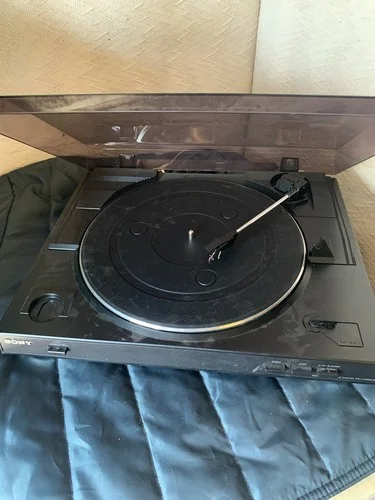
Use these catalog picks as a shortlist for before you buy record players: a 9-point checklist. Compare measurements, materials, and return terms side by side instead of buying from a photo alone.

Check the Controls and Everyday Handling
Consider how much automation you want. Fully automatic models can start, stop, and return the tonearm at the end of a record, reducing the chance of leaving the stylus in the run-out groove. Manual models offer more direct control and often provide more room for tonearm adjustment. Semi-automatic designs sit between the two by allowing manual placement while lifting or stopping at the end.
Look for a smooth cueing lever, clearly labeled controls, and a platter that does not wobble. If several people will use the player, simple controls and a secure dust cover may be more valuable than advanced adjustments. Brands such as Victrola, Fite ON, and Panasonic offer products across different formats and price ranges, so compare the individual specifications rather than assuming every model from a brand follows the same design.
Compare Catalog Picks by Pros and Cons
When the catalog presents three picks, compare each one using the same criteria instead of choosing solely by price. Note the main advantage, such as built-in speakers, wireless connectivity, adjustable tracking force, or a stronger upgrade path, then record the trade-off, such as limited outputs, a fixed cartridge, larger dimensions, or fewer supported speeds. A compact all-in-one may win for convenience, while a standalone Direct Drive or belt-drive turntable may be better for a separate stereo system. This pros-and-cons approach keeps the choice tied to your room, records, and equipment.
Check Warranty, Replacement Parts, and Return Policies
A record player contains moving parts, so after-sales support deserves the same attention as sound-related specifications. Check the warranty length, whether it covers the motor and electronics, and how service claims are handled. Confirm that replacement styli, belts, headshells, cartridges, and proprietary power supplies are available in your region. Parts availability can matter more than a small difference in initial price.
Read the return policy before opening the box, particularly when buying online. Make sure returns cover damage in transit, audible defects, speed problems, and missing accessories, and retain the packaging until you know the player works correctly. On arrival, inspect the stylus, platter, tonearm, cables, and dust cover before connecting anything. Then test both speeds you use most, listen for unusual motor noise, and verify that the player works with your intended speakers or amplifier. A careful nine-point check helps you buy a system that fits your records and listening space, not just one that looks appealing in a listing.